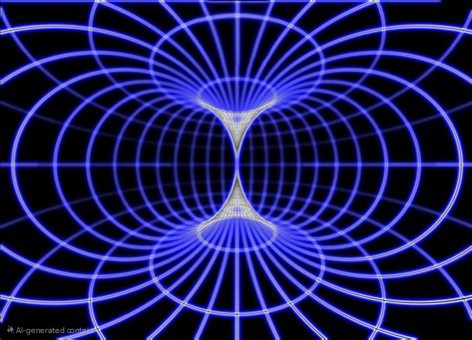





To witness music not merely as a wash of color, but as a rigid, unfolding geometry is to experience the raw, structural scaffolding of sound.

Within this specific dimension of the sensorium, auditory frequencies do not simply bleed into formless gradients; they construct absolute, multidimensional space.
In this geometric translation, every acoustic property corresponds to a structural dimension: Pitch as Altitude and Vector:

High-frequency registers often manifest as sharp, elevated points, crystalline lattices, or ascending, needle-like vectors that pierce the internal horizon. Low-frequency sub-bass tones form massive, horizontal planes, monolithic blocks, or deep, obsidian caverns that provide the literal foundation of the visual landscape.
Timbre as Surface Texture:
The quality of a sound dictates the physical texture of the geometry. A clean sine wave constructs perfectly smooth, frictionless cylinders or spheres.

A distorted, textured synthesizer or a gravelly vocal shears through the space, creating jagged, fractured planes, crystalline microstructures, or cracked, metallic surfaces.
When a note or timbre is struck, it acts as a spatial architect within the mind, projecting precise lines, volumes, and angles that shift in perfect synchronicity with the acoustic wave.
Volume as Volumetric Scale:

A sudden crescendo causes the geometric architecture to violently expand, ballooning in scale or lunging forward into the foreground of perception, while a dimming decrescendo causes the structures to recede, collapse inward, or flatten into the dark matter of the background.Intervals and Chords as Interlocking Architecture: Single notes form isolated points or lines, but chords create complex, interlocking polyhedrons. A perfect, consonant interval might construct a symmetrical, balanced crystalline form, whereas a harsh, dissonant chord warps the geometry, twisting the angles into sharp, asymmetrical, and unstable configurations.
The Structural Synesthesia:

The Disinhibited Parietal Gateway
This is not a vague, imaginative association of shapes to a mood; it is an involuntary, internal spatial mapping. The brain’s processing centers for spatial awareness and structural form are localized within the parietal and occipital networks are directly tethered to the auditory cortex.
As the music moves through time, the geometry moves through the mind,
constructing a fluid yet hyper-precise architecture that allows you to visulize the shape of the sound waves as they unfold. It is a continuous, living blueprint of the composition, and is rendered visible internally.