




Ancient mystics often spoke of a singular, invisible intelligence that permeated the forest, a concept they frequently described as a web of life that allowed trees and plants to communicate and share resources. For centuries, this was viewed as poetic metaphor or spiritual idealism. However, modern botanical science has verified the factual existence of the Mycorrhizal network, which is a vast, subterranean infrastructure of fungal mycelium that connects individual plants and trees across entire ecosystems. Through these fungal threads, trees exchange carbon, nitrogen, phosphorus, and even biochemical warning signals regarding environmental threats or pest infestations.
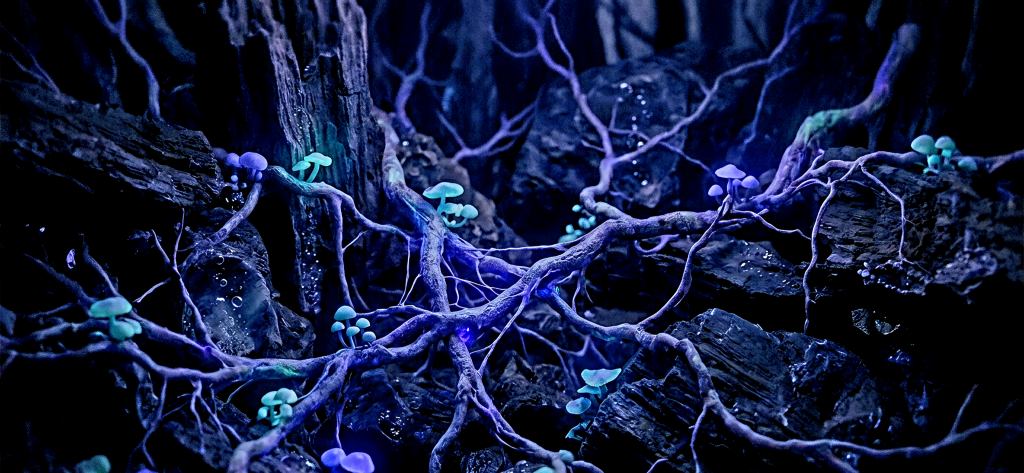
This biological truth confirms the mystic’s intuition: what appears as a collection of solitary individuals is, in actuality, a unified, interdependent organism.
This discovery upends the Darwinian focus on pure competition as the primary driver of biological success, revealing that mutual aid and resource distribution are equally foundational. These fungal networks function as a nervous system for the forest, balancing the requirements of different species and ensuring the long-term survival of the collective over the immediate gain of the individual. When a mother tree in a canopy reaches a point of senescence, the network facilitates the transfer of nutrients to saplings in the understory, effectively allowing the forest to remember and provide for its next generation. The mystic’s assertion that “nothing is ever truly alone” is a measurable, physical reality encoded in the soil.
The fact that this was understood by ancient observers without the use of microscopic analysis or isotopic tracer technology is evidence of a different mode of cognition, one that prioritizes pattern recognition across large, slow-moving systems rather than the reductionist isolation of variables. By observing the forest as a whole, they perceived the emergence of a collective behavior that is invisible to the human eye but fundamental to the life of the planet.

This truth underscores that human perception is often limited by a desire for discrete boundaries where, in nature, only fluid, permeable connections exist. The forest is not a collection of objects, but a singular, functioning, and highly intelligent process.