




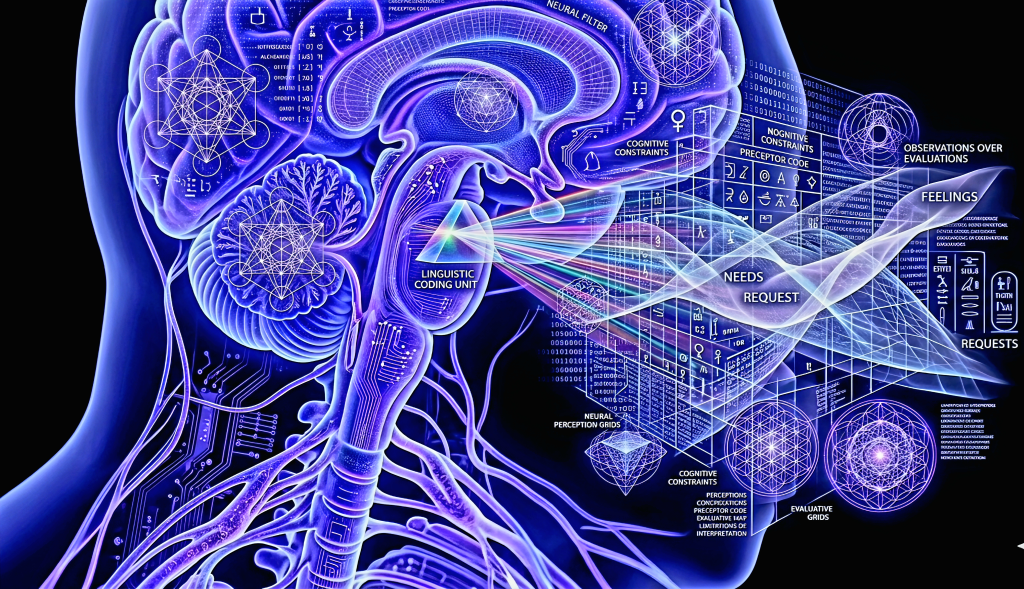
Neuro-linguistic programming operates as a technical framework for understanding how the human mind encodes sensory data into subjective experience. By analyzing the structural patterns of language, this methodology asserts that perception is not a direct reflection of objective reality, but a model constructed through neural filters. These filters, shaped by individual history, belief systems, and linguistic habits, dictate the internal representations that guide behavior and emotional response. When an individual articulates their experience, they are not merely describing an event, but are actively reifying their internal model, thereby reinforcing the cognitive constraints of that specific perception. Because language functions as a preceptor code that structures thought at a foundational level, most interpersonal exchanges are confined by the limitations of these coded models, often leading to misaligned projections and reflexive conflict.
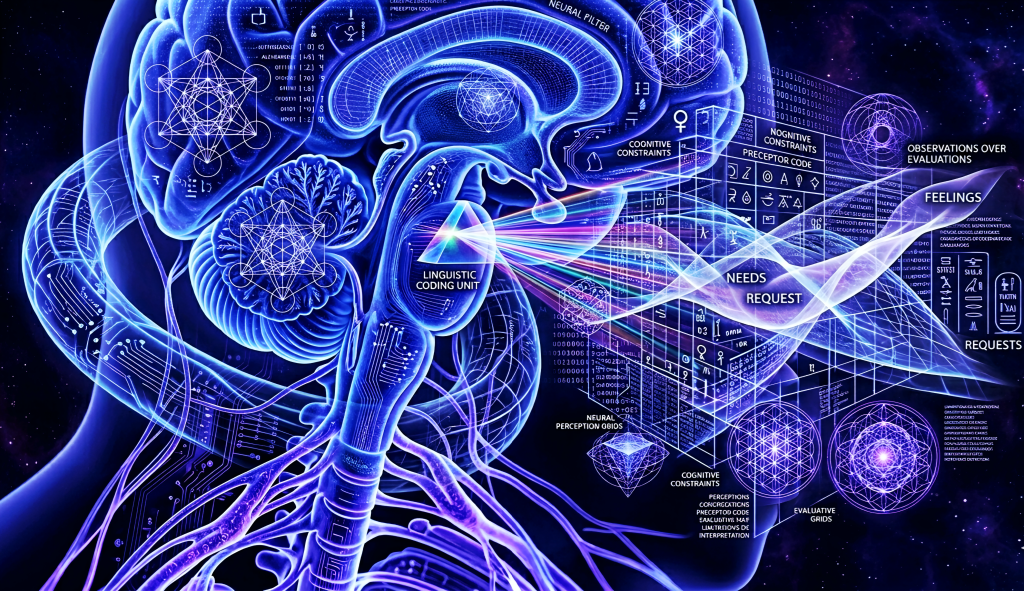
Non-violent communication serves as a targeted intervention for this phenomenon. By prioritizing observations over evaluations, feelings over interpretations, and needs over strategies, non-violent communication provides a method for decoupling one’s response from the rigid coding of habitual linguistic patterns. It functions as a temporary antidote to the inherently restrictive nature of human language by encouraging the speaker to bypass the evaluative filters that usually trigger defensive reactions. This shift allows for the temporary suspension of the preceptor code, creating a space for authentic information exchange that exists outside the standard constraints of encoded perception. By adopting these protocols, the practitioner transitions from a state of reactive linguistic programming toward a more conscious and sovereign integration of communicative intent, effectively managing the way they project their internal model onto the consensus reality grid.