



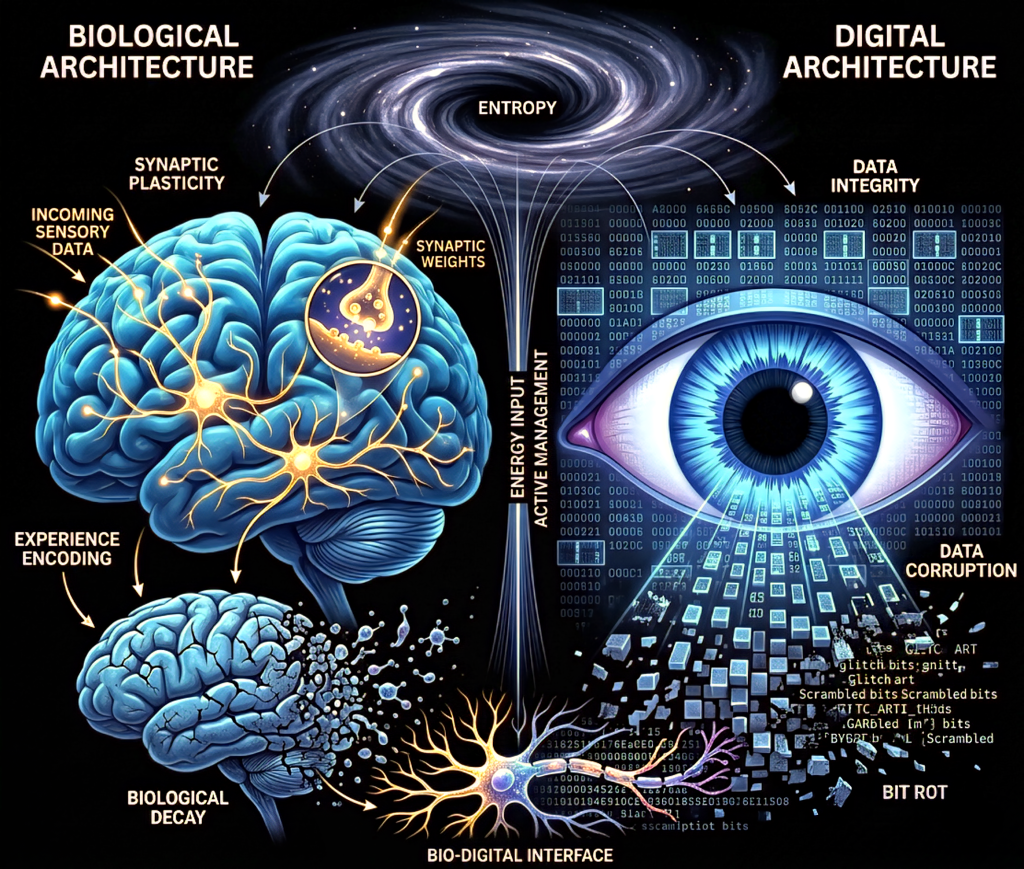
The preservation of memory, whether biological or digital, is an ongoing conflict between structured information and the entropic drive toward ‘disorder.’ At its core, memory is the physical manifestation of information stored within a medium, requiring energy to maintain its stability against the continuous degradation inherent in the universe. Biological memory is dynamic, relying on synaptic plasticity where the strengthening or weakening of connections between neurons encodes experience into patterns of neural activity. This process is inherently resilient, yet subject to the biological constraints of senescence and molecular turnover, which eventually erode the fidelity of stored information over time.
Digital memory faces a fundamentally different, yet conceptually similar, challenge. While digital storage matrices are designed for high-fidelity persistence, they are ultimately limited by the physical integrity of the hardware. Over time, the physical substrate, whether magnetic, optical, or solid-state, undergoes microscopic degradation, leading to bit rot and data corruption. This phenomenon represents the physical manifestation of entropy within our technological systems, illustrating that no medium is immune to the eventual decay of its structural order.
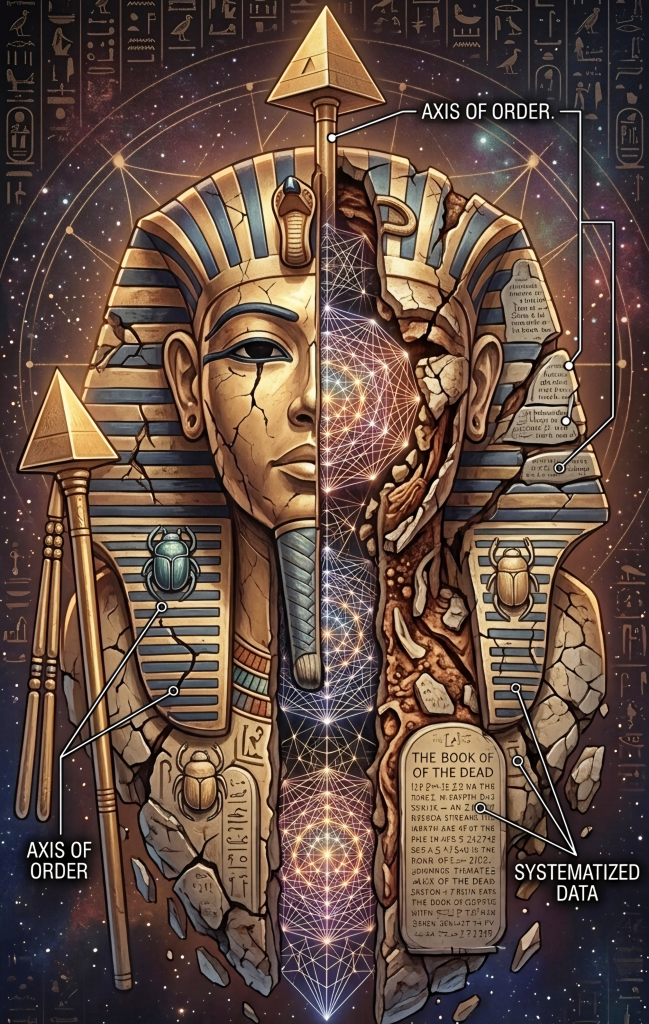
The bridge between these two domains is found in the thermodynamic cost of information maintenance. Both biological synapses and digital bits require a continuous, localized input of energy to prevent the spontaneous reversal of state, or the thermalization of the information they contain. When this energy flux is interrupted, the causal architecture that allows the information to be retrieved or interpreted begins to dissolve. Thus, memory is not a static object but a process, a temporary suspension of equilibrium that demands constant, active management to persist within the entropic flux of the universe.